World’s largest balloon constellation

Atlas

Our global sensing constellation delivers the critical observations that are closing the atmospheric data gap.

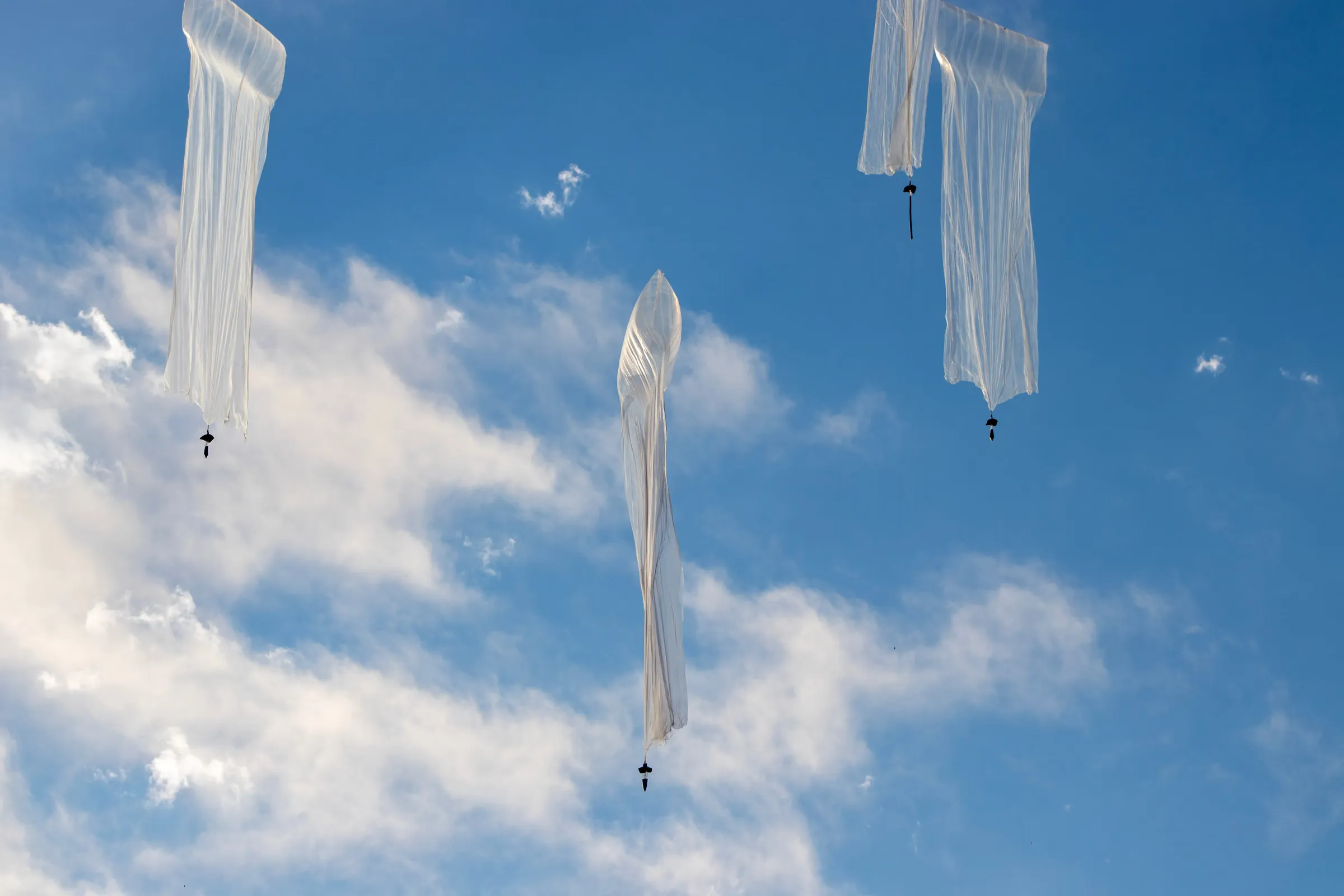
Multiple WindBorne Global Sounding Balloons ascending through a blue sky

The atmospheric data gap

The problem and our solution

Today’s weather observation infrastructure relies on a global network of radiosondes and ground-based stations. The gaps fall precisely where they hurt most: over oceans, polar regions, and remote areas where key weather patterns form. The resulting weather uncertainty costs tens of billions every year in the U.S. alone and results in loss of life worldwide.

To close the atmospheric data gap worldwide, WindBorne operates and maintains Atlas—a global sensing network that comprises the largest balloon constellation in the world, continuously collecting in-situ atmospheric soundings from pole to pole. Atlas is powered by autonomous, long-duration high-altitude balloons called Global Sounding Balloons (GSBs) that drastically improve upon legacy weather balloons in performance, endurance, sustainability, and cost. GSBs weigh less than three pounds at launch and carry sensors calibrated to collect vital atmospheric data from ground level into the stratosphere. Atlas currently maintains hundreds of GSBs aloft globally.

At scale, Atlas will encompass the globe with 10,000 GSBs concurrently aloft—the coverage level cited by the World Meteorological Organization as adequate for weather forecasting.

Persistent global coverage

Building a planetary nervous system

Atlas is the only balloon network capable of providing consistent, comprehensive atmospheric coverage worldwide.

16 active launch sites

  • Global launch network

    A launch network spanning six continents supports persistent worldwide coverage.

  • Vast data collection

    Atlas collects millions of kilometers of atmospheric observations every month.

  • Autonomous navigation

    Our flight system uses wind patterns to guide balloons toward high-value target regions.

  • Rapid deployment

    A single operator can manage a launch site and launch multiple GSBs per day.

Data as a service

From the surface to the stratosphere

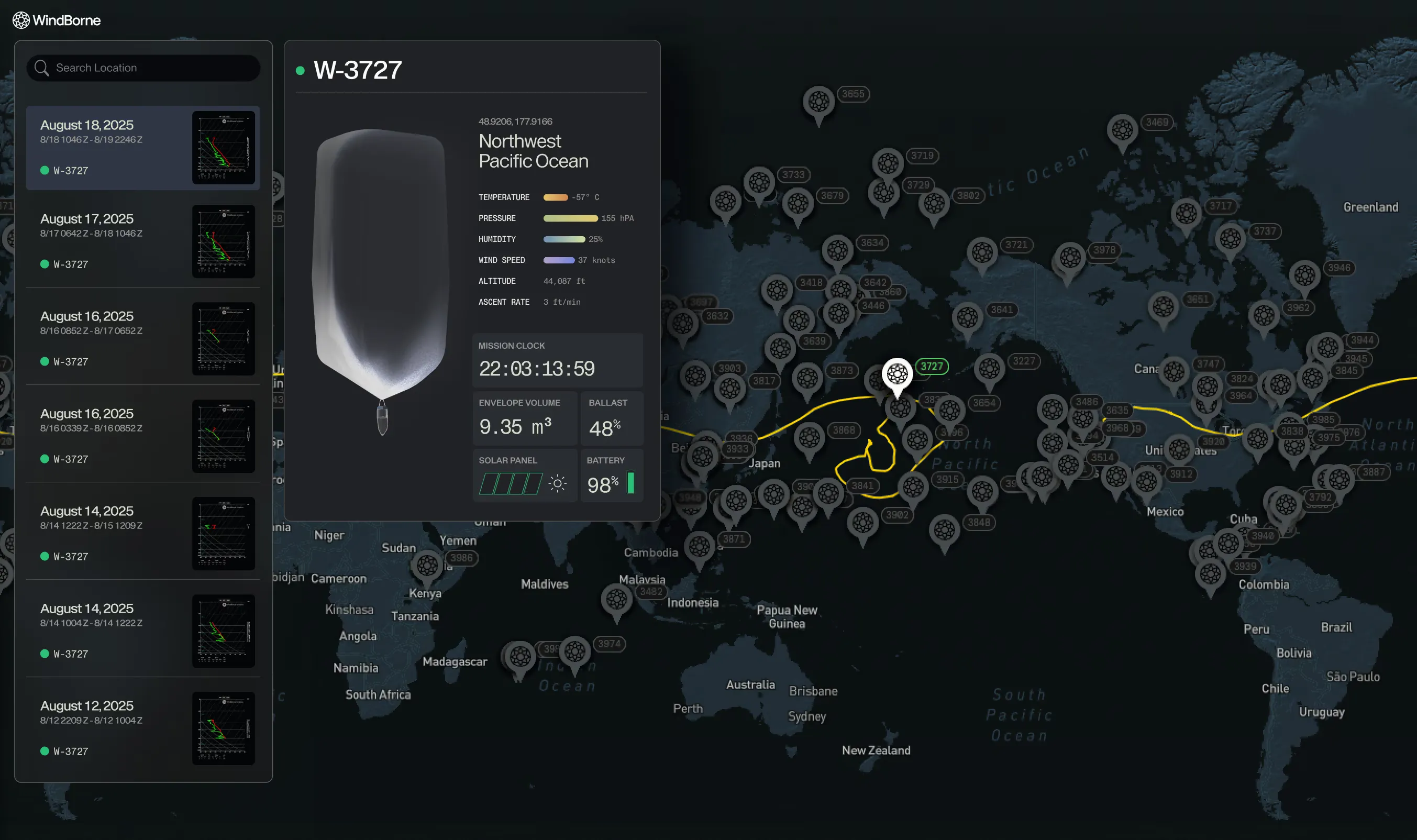
WindBorne Live dashboard showing observations from a balloon over the northwest Pacific Ocean

Data as a service

Continuous profiles across remote regions

Complete atmospheric coverage

Temperature, pressure, humidity, and wind data captured from the surface to the stratosphere in real-time vertical columns.

Data density like never before

Every 10 km of vertical flight delivers comprehensive atmospheric measurements with 50 or more profiles per flight—far exceeding single-point radiosondes.

Trusted scientific standards

WMO-validated data trusted by meteorologists and government agencies through rigorous comparisons with traditional methods.

Forecast impact

Better inputs make better forecasts

Weather models depend on atmospheric observations. Augmenting current data collections by any measure can lead to significantly more accurate forecasts, and closing the atmospheric data gap can ensure a future in which weather certainty becomes a reality. WindBorne data is distributed globally through the WMO Global Telecommunication System and assimilated into NOAA’s Global Forecast System.

NOAA studies have shown that WindBorne observations improve the accuracy of physics-based forecast models.

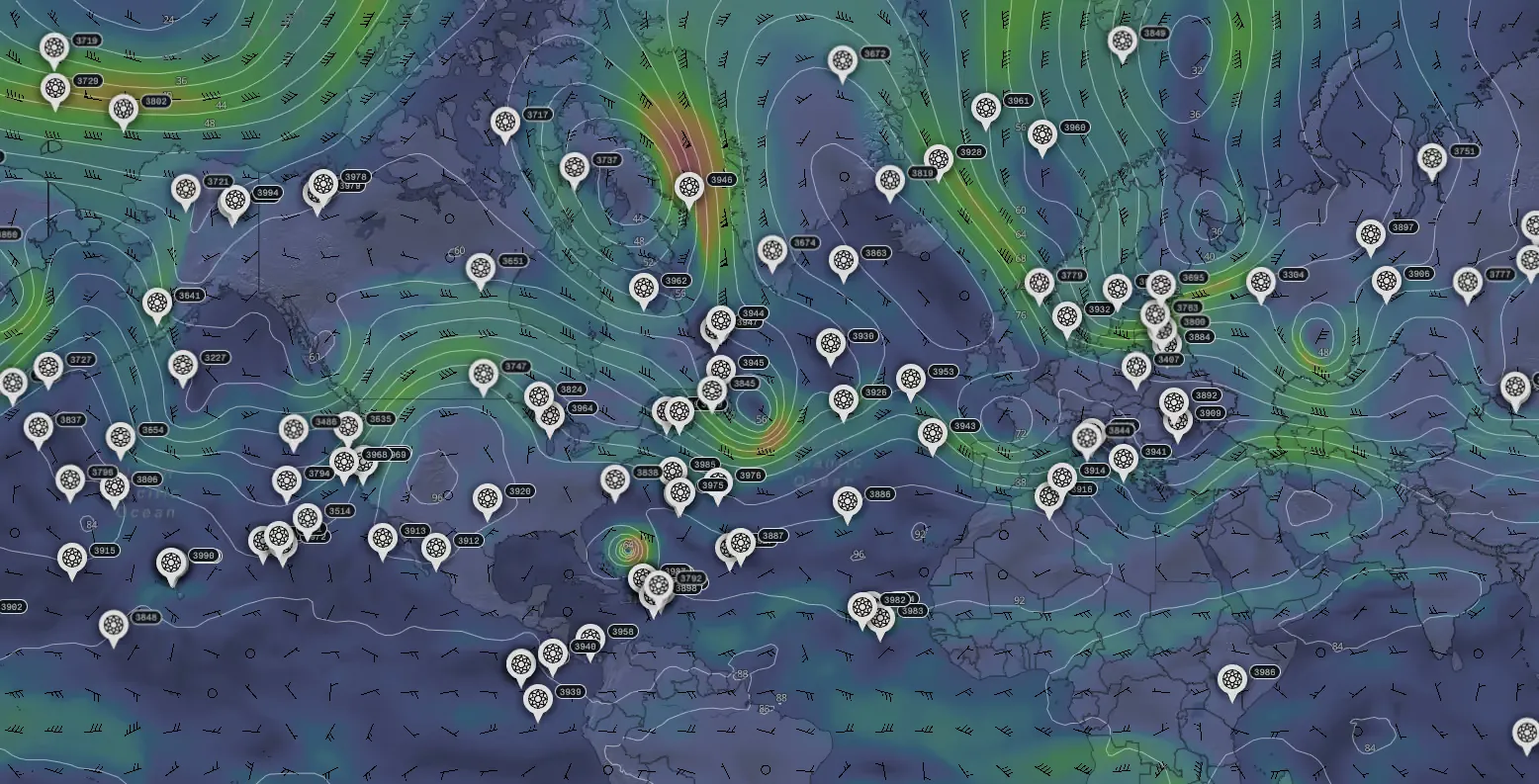
Forecast wind map over Europe with WindBorne balloon locations

How Atlas works

Built to stay aloft and keep collecting

Our proprietary balloon technology allows us to collect critical atmospheric data worldwide.

Balloon weight
2.6lblightweight GSB design
Real-time data
10minon average, from collection to user delivery
Typical flight
15+dayswith a record flight of 345 days
  • Precision altitude control

    Enables detailed vertical profiles of the atmosphere.

  • Advanced navigation

    Wind-aware routing guides balloons toward target locations.

  • Proven performance

    Capability for triple circumnavigation and global coverage.

  • Satellite communications

    Transmit data in real-time to our forecasting systems.

  • Solar-powered sensors

    Each GSB measures temperature, humidity, pressure, and wind.

Schedule a balloon launch

Expanding data collection

One platform. More ways to observe.

GSB-deployed dropsondes

Our GSBs can deploy lightweight atmospheric sensors into severe storms, multiplying data collection from a single flight. Unlike traditional aircraft-deployed dropsondes, our remote deployment eliminates aircraft and pilot risk. We have successfully deployed sensors into hurricane cores. Read about how we deploy dropsondes into hurricanes, circumnavigate the globe, and more on our blog.

GSB-to-buoy capability

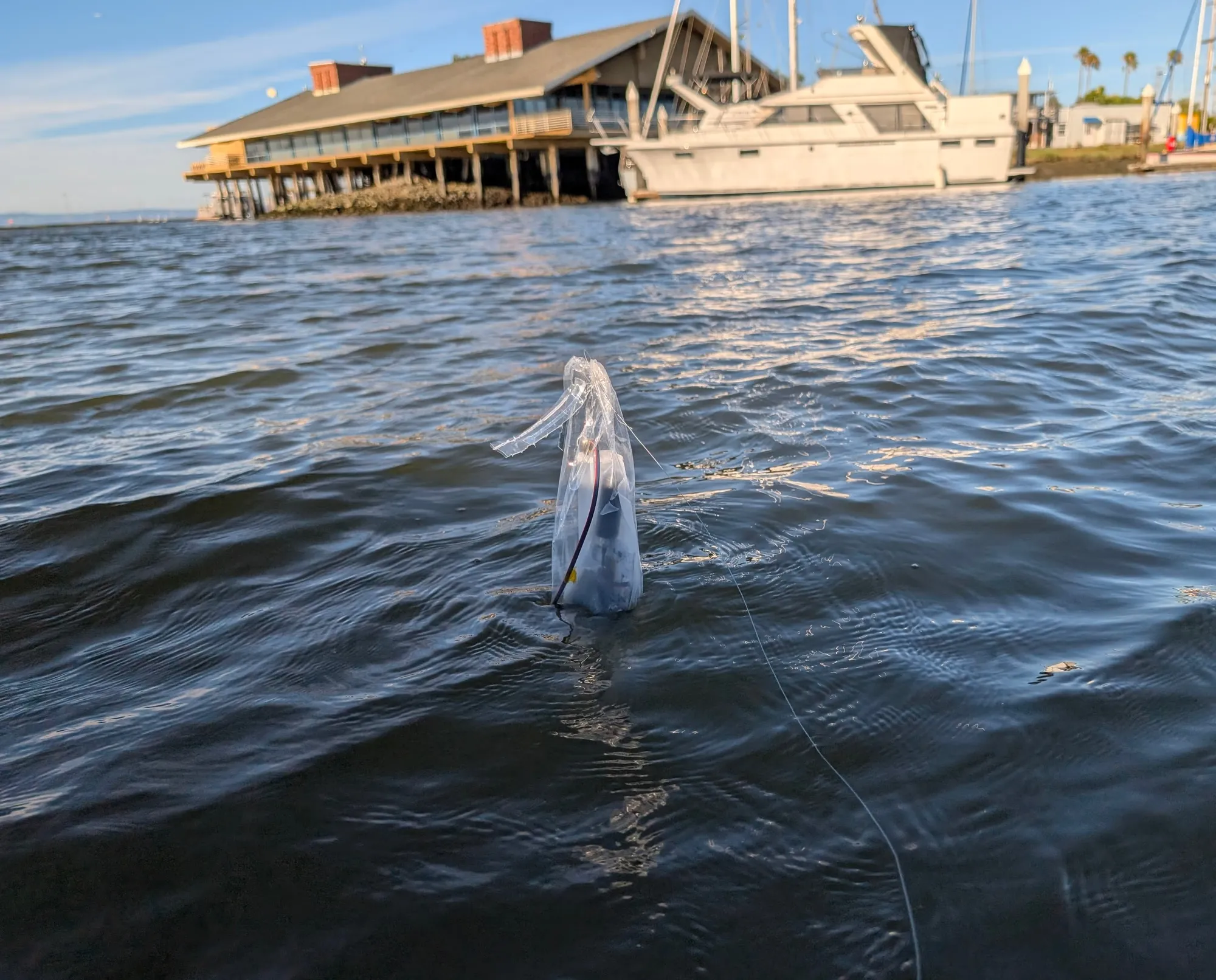
GSBs feature the world’s first balloon-to-buoy capability. After completing atmospheric data collection, GSBs transition into buoys, detaching their envelopes in order to continue operating as ocean buoys and extending coverage across both atmospheric and marine domains.

A WindBorne Global Sounding Balloon operating as an ocean buoy near a marina